Lung cancer — screening, biopsy and staging
Early detection and a clear staging pathway change what comes next. Dr. Arun Gangadhar provides bronchoscopic diagnosis, EBUS-TBNA staging and multidisciplinary coordination at Lung Care, RS Puram, Coimbatore.
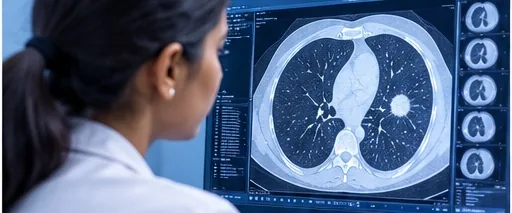
Lung cancer is abnormal growth of cells in the lung tissue or airways. It is often first noticed as a shadow, nodule or mass on a chest X-ray or CT scan done for a cough, a health check, or something entirely unrelated.
The single biggest factor in outcome is how early the diagnosis is made and how accurately the disease is staged. Two people with the same scan can have completely different treatment plans depending on lymph node involvement and molecular markers — which is why tissue sampling and structured staging come before any treatment decision.
Warning signs that need a specialist review
- A cough that has changed, worsened or lasted more than three weeks
- Blood in the sputum, even once
- Unexplained weight loss or loss of appetite
- Breathlessness or a hoarse voice that persists
- Chest, shoulder or back pain that does not settle
- Repeated chest infections in the same part of the lung
Who is at risk
In India a large share of lung cancers occur in never-smokers. If you have a persistent shadow on imaging, the absence of a smoking history should never be a reason to wait and watch. Read more about a lung nodule found on a CT scan and persistent cough.
The diagnostic pathway, step by step
Consultation & imaging review
We review your chest X-ray or CT alongside your symptoms, smoking history and exposures, and decide what actually needs to be sampled.
Tissue diagnosis
Bronchoscopy, EBUS-TBNA or radial EBUS obtains tissue from the lesion or the lymph nodes — usually as a day-care procedure without open surgery.
Staging
PET-CT and mediastinal nodal sampling define the stage. Accurate staging is what determines whether surgery, radiotherapy or systemic therapy is right.
Molecular testing
EGFR, ALK, ROS1 and PD-L1 testing on the same sample opens the door to targeted tablets and immunotherapy instead of conventional chemotherapy.
Multidisciplinary plan
Your case is discussed with thoracic surgery, medical and radiation oncology, then explained to you and your family in plain language.
Tests and procedures we perform
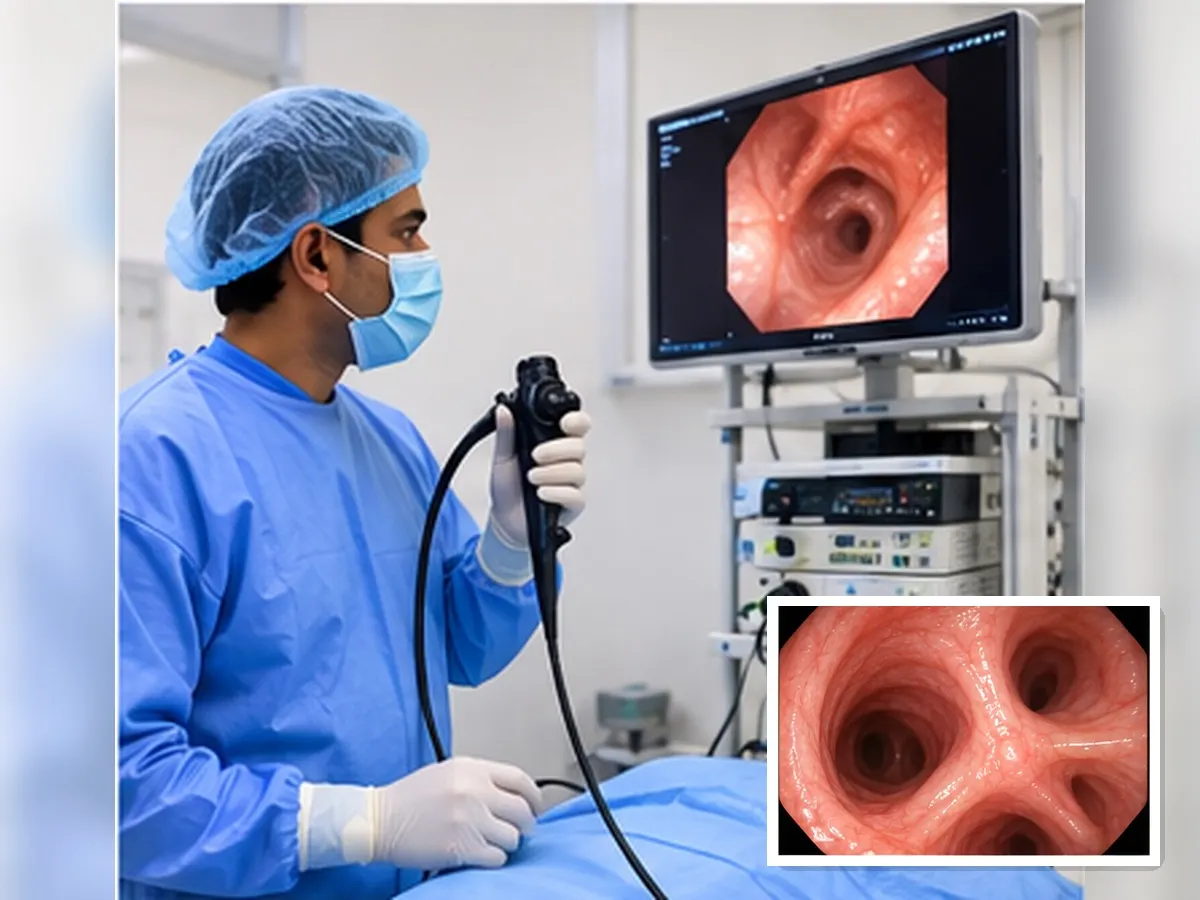
Bronchoscopy
A thin flexible camera inspects the airways and samples central lesions directly.
Learn more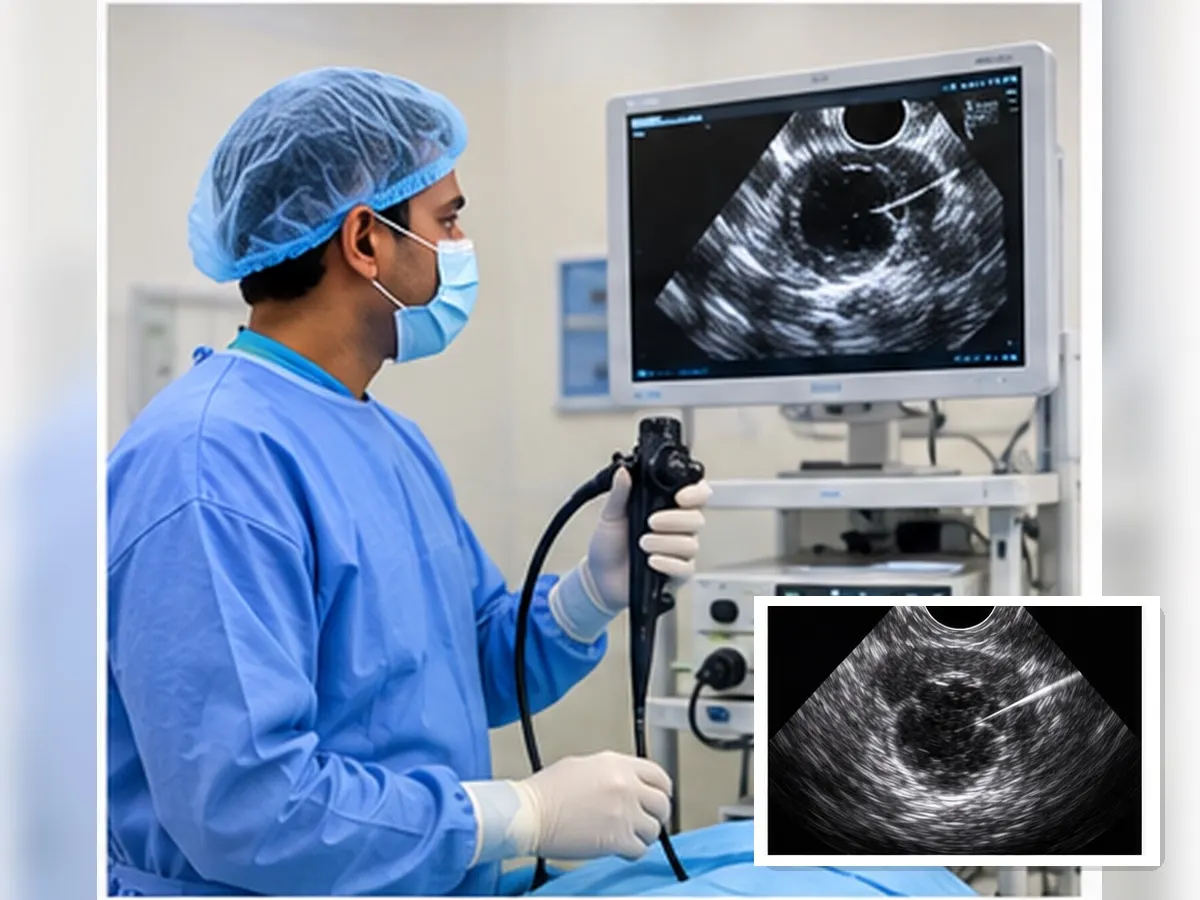
EBUS-TBNA
Ultrasound-guided needle sampling of mediastinal lymph nodes — the key staging test for lung cancer.
Learn more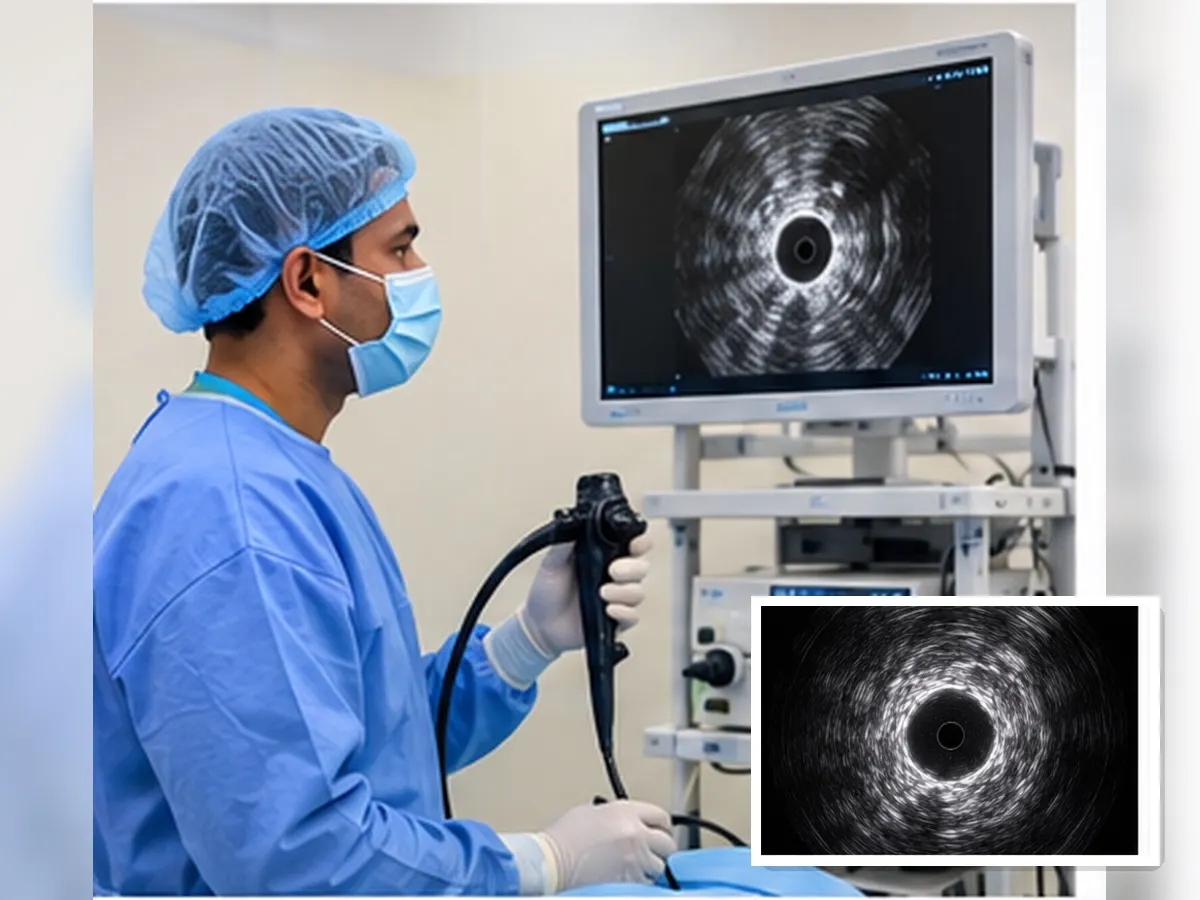
Radial EBUS for peripheral nodules
Reaches nodules in the outer lung through the airways, avoiding a surgical biopsy in most patients.
Learn more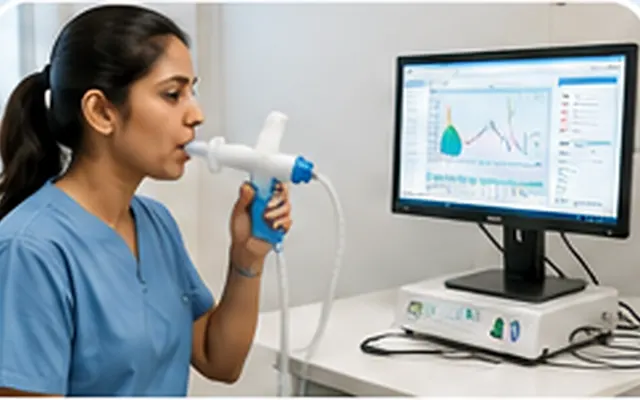
Lung function testing
Confirms whether your lungs can safely tolerate surgery, radiotherapy or chemotherapy.
Learn moreHow lung cancer is treated today
Early-stage disease
Surgical removal or stereotactic radiotherapy, offered when staging confirms the disease is confined. Lung function testing decides fitness.
Locally advanced disease
Combined chemotherapy and radiotherapy, often followed by immunotherapy, coordinated with medical and radiation oncology.
Targeted therapy
Oral tablets for EGFR, ALK and ROS1 driven cancers — frequently effective in never-smokers and far better tolerated than chemotherapy.
Immunotherapy & supportive care
PD-L1 guided immunotherapy, plus airway stenting, pleural drainage and breathlessness management to protect quality of life.
Airway obstruction, malignant pleural effusion and bleeding are managed with interventional pulmonology procedures — bronchoscopic debulking, stenting and pleural procedures.
Reducing your risk
- Stopping smoking at any age lowers risk — we offer structured cessation support
- Ventilate cooking areas and move away from biomass fuel where possible
- Use protective equipment for dust, asbestos and diesel exhaust exposure
- Discuss annual low-dose CT screening if you are a long-term smoker aged 50–75
- Complete treatment for tuberculosis and follow up on residual scarring
- Never ignore a cough that lasts beyond three weeks
Common questions
Common myths — and what is actually true
“Only smokers get lung cancer.”
Smoking is the single biggest risk, but a substantial number of patients have never smoked — second-hand smoke, biomass cooking smoke, radon, asbestos, air pollution and inherited factors all contribute.
“A biopsy makes cancer spread.”
There is no evidence that a diagnostic biopsy spreads lung cancer. Without tissue, the type and molecular profile are unknown — and those decide which treatment will work.
“No symptoms means no cancer.”
Early lung cancer is often silent, which is why many are found on a scan done for another reason. Symptoms usually appear later, not first.
“Every lung nodule is cancer.”
Most small nodules are not. Size, edge, density and change over time guide whether a nodule needs follow-up imaging, a PET scan or sampling.
“If it is cancer, treatment is pointless.”
Treatment today depends on stage and molecular type. Early disease can be treated with intent to cure, and in advanced disease targeted therapy and immunotherapy have changed outcomes considerably.
“Quitting now makes no difference after a diagnosis.”
Stopping smoking improves how well surgery, radiotherapy and chemotherapy are tolerated and reduces complications. It is worthwhile at every stage.
When should you see a pulmonologist for a suspected lung cancer or lung nodule?
- Cough lasting more than three weeks, or a change in a long-standing smoker’s cough.
- Any amount of blood in the sputum.
- Unexplained weight loss, loss of appetite, or persistent chest or shoulder pain.
- A hoarse voice, or breathlessness that is new and progressive.
- A nodule, mass, pleural fluid or enlarged lymph nodes reported on a chest X-ray or CT.
How Lung Care can help
- A single pathway from suspicion to diagnosis — imaging review, bronchoscopy, EBUS-guided lymph-node sampling and medical thoracoscopy under one roof.
- Tissue handled so that molecular and immunotherapy markers can be tested, not just a basic diagnosis.
- Staging and fitness assessment, including pulmonary function testing before surgery or radiotherapy.
- Referral and coordination with thoracic surgery and oncology, with results explained to you and your family.
- Pleural fluid drainage and symptom control where breathlessness is the main problem.
Tests and services this involves
Bronchoscopy, EBUS, cryobiopsy and medical thoracoscopy — tissue and lymph-node sampling under one roof.
Spirometry with bronchodilator reversibility, lung volumes and diffusion capacity (DLCO) on calibrated equipment.
What size, shape and follow-up interval actually mean before you assume the worst.
A practical, week-by-week plan used with patients at the clinic.
Tuberculosis and other infections can imitate cancer on a scan — how they are told apart.
MBBS, DNB (Pulmonary Medicine), MNAMS, IDCCM, EDARM — consultant interventional pulmonologist and sleep physician, RS Puram, Coimbatore.
About the doctor performing the diagnostic procedures
Procedure-level detail and Dr. Arun's academic profile live on his professional website.
A shadow on your scan deserves a clear answer
Bring your scans and reports to the clinic in RS Puram, or start with a video consultation for a second opinion from outside Coimbatore.
Written and medically reviewed by Dr. Arun Gangadhar
MBBS, DNB (Pulmonary Medicine), MNAMS, IDCCM, EDARM — Consultant Interventional Pulmonologist & Sleep Physician, Lung Care, RS Puram, Coimbatore.
Published: July 2026 · Last reviewed: August 2026
References & guidelines
This page is general information, not a substitute for a consultation. For advice specific to you, book an appointment.