Bronchial asthma, explained simply
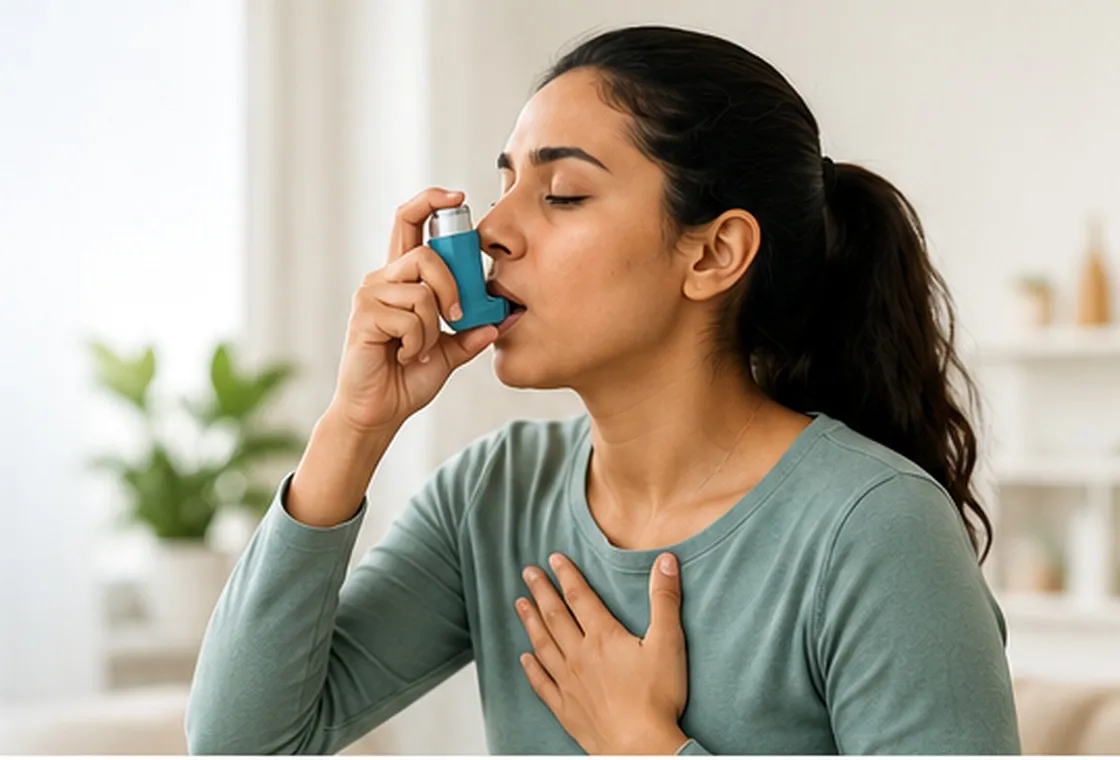
Asthma is reversible narrowing of the breathing tubes — and that one word is the good news. With the right diagnosis and the right inhaler, almost everyone with asthma can live a completely normal, symptom-free life.
We confirm asthma with objective tests, choose the smallest effective inhaler, and check your technique at every single visit.
Dr. Arun Gangadhar · Lung Care — The Pulmonary Clinic, RS Puram, Coimbatore
In asthma the tube narrows from three directions at once — swelling, muscle spasm and mucus.
What happens inside your airways
The lining of the airway becomes inflamed and swollen, the muscle around it squeezes tight, and extra mucus collects inside. Air can get in, but struggles to get out — which is why you wheeze.
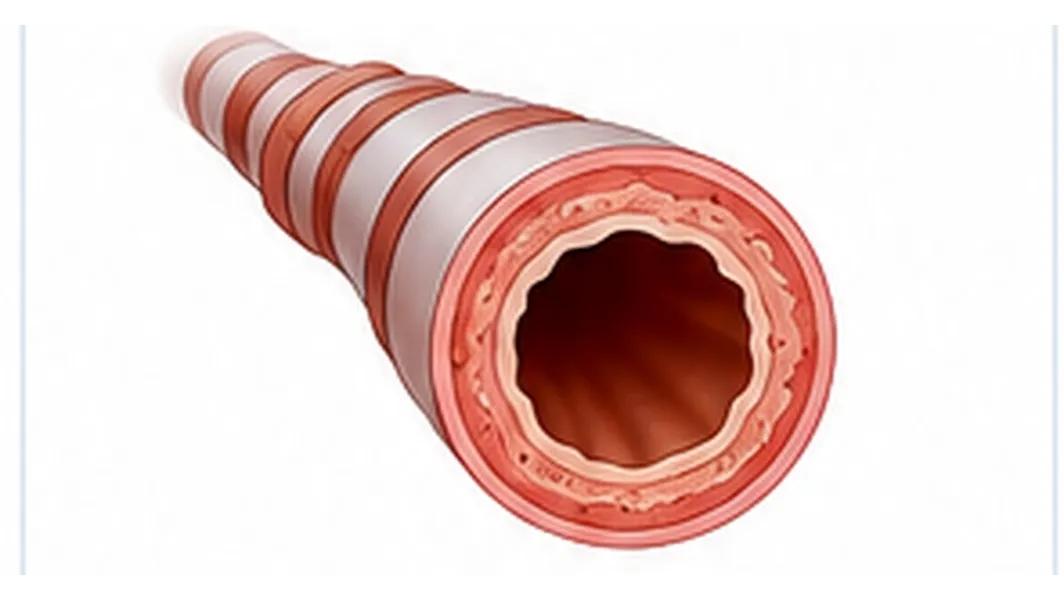
Wide open tube, relaxed muscle, thin lining — air moves freely.
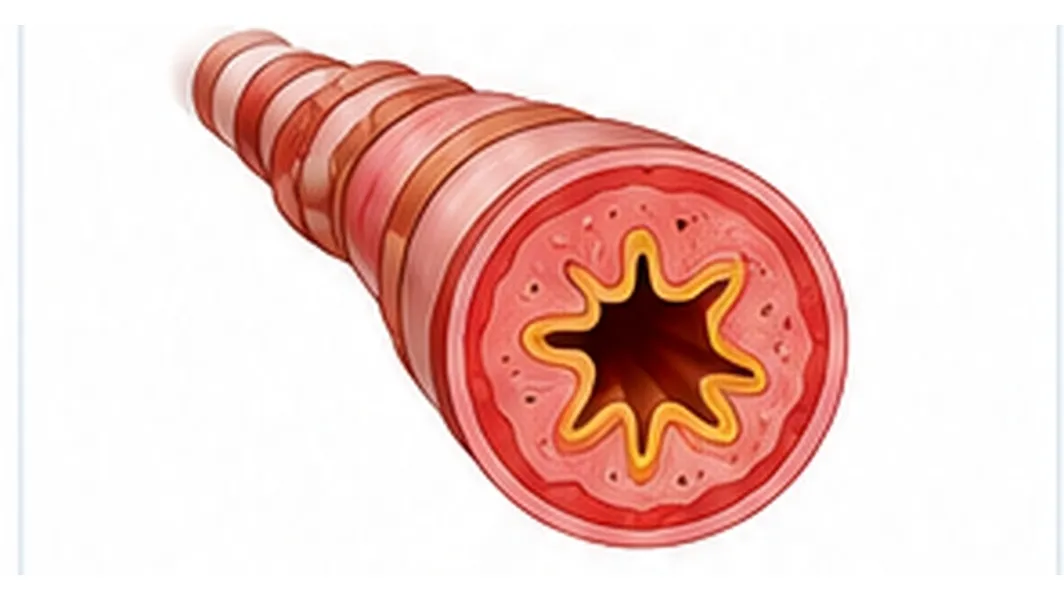
Swelling + muscle spasm + mucus = a much narrower tube.
Symptoms to look out for
- Wheezing — a whistling sound when you breathe out, often worse at night or in the early morning.
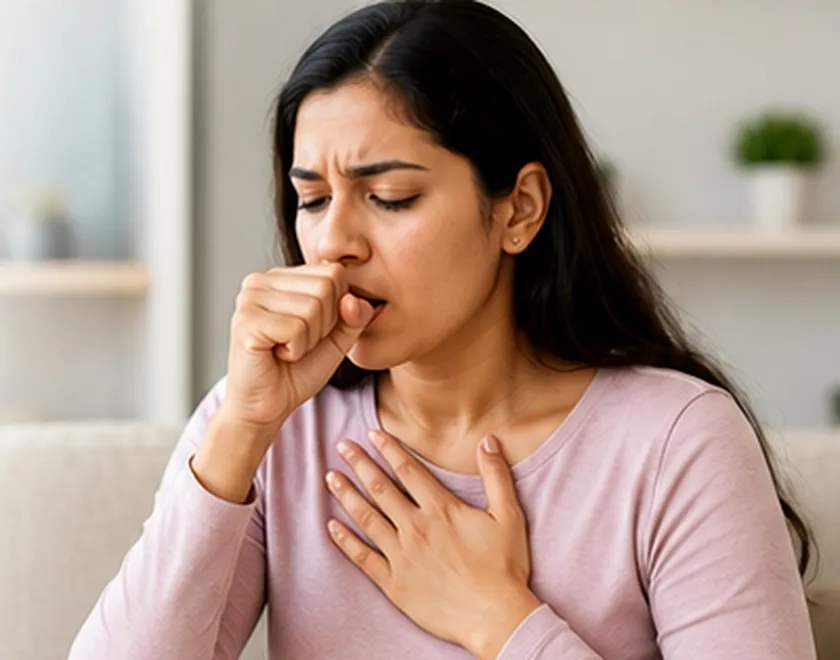
- Cough that flares with exercise, cold air, dust, smoke or pollen — sometimes the only symptom.
- Chest tightness or a feeling that you cannot take a full, satisfying breath.
- Waking at night or before dawn because of cough or breathlessness.
- Symptoms that come and go — good weeks and bad weeks, or a pattern by season.
Why here, why now
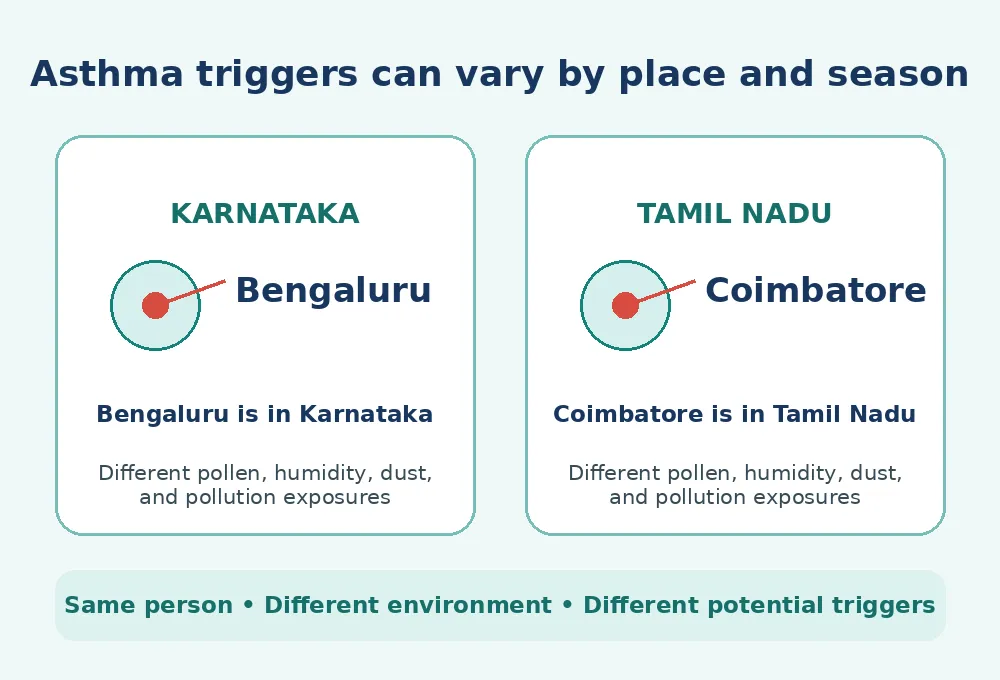
“I never had asthma in Bengaluru. It started when I moved to Coimbatore.”
We hear this every week — and the reverse too. Asthma is set off by what is in the air around you. Pollen species, humidity, dust, cotton and textile exposure, traffic and industrial pollution all change from city to city, and even between RS Puram and the outskirts of Coimbatore.
Moving does not give you asthma. The tendency was always there — the new place simply revealed it. That is also why a holiday in the hills can make you feel completely normal for a week.
What it means for you: bring your history of places, seasons and jobs to the consultation. It often points to the trigger faster than any test. If nose and eye symptoms dominate, start with our allergy specialist consultation in Coimbatore.
Find your trigger — it changes everything
Most people have two or three specific triggers. Once we name them, avoiding them does half the work of your treatment.


Tests we use to confirm asthma
Asthma should never be a guess. These tests are painless, take a few minutes, and are done right here in the clinic.
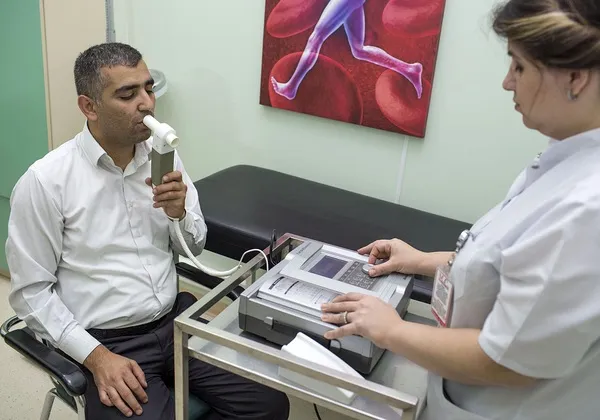
You blow hard into a tube. We measure the narrowing, then repeat it after a reliever puff — if the numbers open up, that is asthma proven. This is the gold standard.
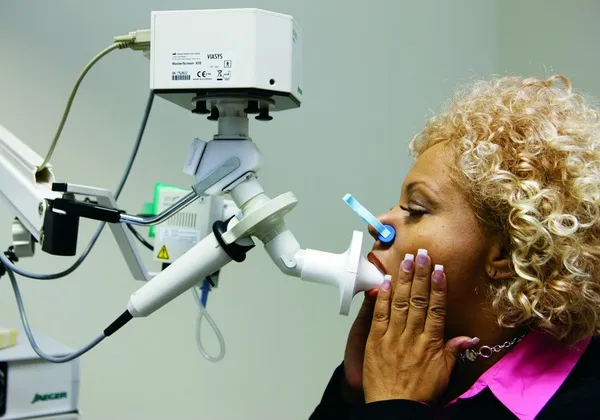
You just breathe normally — no hard blowing needed. Ideal for children, older patients and anyone who finds spirometry difficult. It also picks up small-airway disease early.

Tiny drops of common allergens are placed on the forearm and gently pricked. A small itchy bump within 15–20 minutes names your allergy — dust mite, pollen, pet or mould.
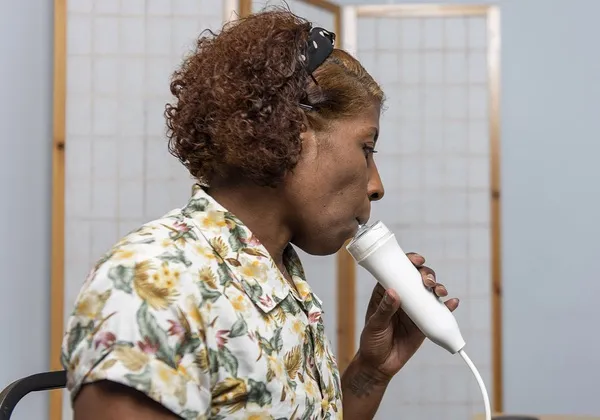
FeNO breath test for airway inflammation, blood eosinophil and IgE levels, a chest X-ray to rule out other causes, and a home peak-flow diary when the picture is unclear.
Special kinds of asthma

Cough, wheeze or tightness 5–10 minutes into exercise or just after stopping. It does not mean you should stop sport — it means you need a warm-up, a pre-exercise puff and good background control. Many Olympic athletes have asthma.
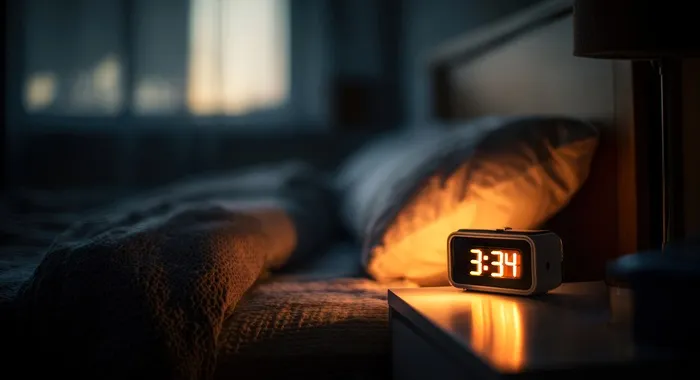
A dry cough for weeks with no wheeze at all is a common, often missed form. Waking at 3–4 am is a warning that control is slipping.
Linked to allergic rhinitis, workplace dust or fumes, or a fixed season each year. Treating the nose, or changing one exposure at work, can transform the chest.
Asthma in pregnancy and in young children needs its own plan. Please ask — treatment is safe and important in both.
Treatment: the inhaler does the work
Asthma treatment has two parts — a daily controller that calms the inflammation, and a reliever for immediate rescue. The aim is that you rarely need the reliever at all.
An inhaled steroid (ICS), often combined with a long-acting opener (ICS-LABA). Taken morning and night whether or not you feel unwell — this is what prevents attacks.
Opens the airway within minutes during symptoms or before exercise. Needing it more than twice a week is a signal to come back for review, not to buy more.
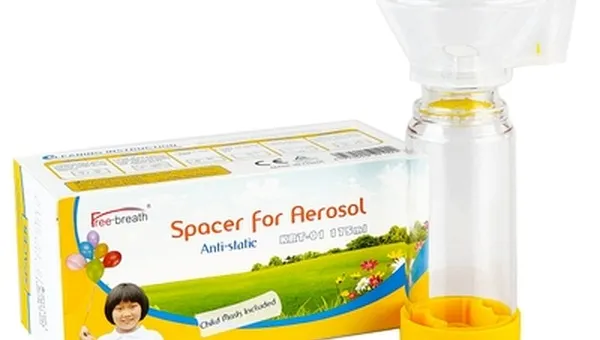
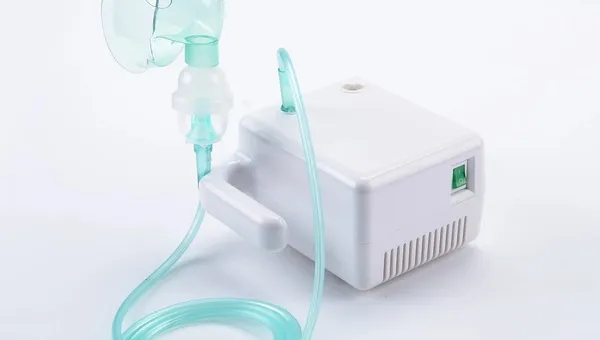
The devices you may be given
Inhalers are safe. Really.
This is the most common worry we hear, so let us settle it clearly.
No. There is nothing habit-forming in them. You continue them because the asthma is still there — the same way spectacles are not addictive.
The dose in an inhaler is measured in micrograms and goes straight to the airway — a tiny fraction of a steroid tablet, and far safer than repeated tablets, injections or untreated attacks.
The opposite. Starting early keeps asthma mild and prevents permanent damage. They are the first treatment, not the last resort.
Feeling well is the treatment working. Step down only when we do it together — never on your own.
Rinse your mouth after each controller dose and use a spacer — that takes care of the only two common side effects (throat irritation and oral thrush).
Living well with asthma
Your inhaler does the heavy lifting. These three habits make it work better.

Do not avoid it. Walking, swimming and yoga build lung stamina. Warm up for 10 minutes, use your reliever beforehand if advised, and avoid cold, polluted or high-pollen air.

No food cures asthma, and curd, banana and cold water are not villains. Eat plenty of fruit and vegetables, keep weight healthy, and avoid only foods that clearly and repeatedly trigger you.

Wash bedding weekly in hot water, cut heavy curtains and soft toys in the bedroom, keep smoke and incense out of the house, and take your flu shot.
Come in sooner if…
- Your reliever is needed more than twice a week
- You wake at night with cough or breathlessness
- Symptoms limit your work, school, sport or sleep
- You needed a nebuliser, steroid tablets or the emergency room
Go to hospital immediately if you cannot complete a sentence, your lips look blue, or the reliever is not helping at all.
Common questions
Is asthma curable?+
Asthma is not curable, but it is highly controllable. With the right inhaler and technique, the goal is zero symptoms, zero attacks and zero limitation of activity.
Will I be on inhalers forever?+
Not necessarily. Many adults can step down to lower doses or seasonal-only inhalers once control is established for 6–12 months. We review this at every visit.
Are inhaled steroids dangerous?+
No. The dose is in micrograms and acts locally in the airway. Untreated asthma — and the steroid tablets it eventually needs — carry far greater risk. Rinse your mouth after each dose and use a spacer.
Can my child play sport?+
Yes — and should. Well-controlled asthma should not keep any child off the field. If sport brings on symptoms, the control needs adjusting, not the sport.
Do I need to avoid curd, banana or cold water?+
For most people, no. Avoid a food only if it reliably brings on your symptoms every time. Blanket food restrictions cause more harm than benefit.
Is a nebuliser better than an inhaler?+
No. An inhaler with a spacer delivers the medicine just as well and is far more convenient. Nebulisers are for severe episodes in a clinic or hospital.
Is asthma inherited?+
The tendency to allergy and asthma runs in families, but having a parent with asthma does not mean you will get it — and it can appear with no family history at all.
Is it safe to continue inhalers in pregnancy?+
Yes. Well-controlled asthma is much safer for you and the baby than stopping treatment. Never discontinue your controller because you are pregnant — talk to us instead.
Why did my asthma start only after moving to Coimbatore?+
Because the air is different. Pollen species, humidity, dust, cotton and textile exposure and pollution vary from city to city, so someone who was completely well in Bengaluru can start wheezing within weeks of moving to Coimbatore — and the reverse happens too. The tendency was always there; the new place revealed it.
Which test confirms asthma, and is it done in the clinic?+
Spirometry (PFT) with a reversibility check is the gold standard. We also offer the forced oscillation technique (FOT) for children and older patients who cannot blow hard, and skin prick allergy testing to name your trigger — all done at our RS Puram clinic in Coimbatore.
Can asthma develop in adults who never had asthma as a child?+
Yes. Asthma can begin during adulthood. Adult-onset asthma may be associated with allergies, occupational exposures, respiratory infections, smoking or other triggers, although sometimes no single cause is identified.
Can asthma cause breathlessness even when spirometry is normal?+
Yes. Asthma symptoms can vary over time, and spirometry may be normal when the patient is relatively well. Depending on the clinical situation, bronchodilator testing, peak-flow variability, FeNO or bronchoprovocation testing may be considered.
Why does my asthma keep coming back despite inhalers?+
Poor asthma control can result from incorrect inhaler technique, inadequate adherence, ongoing exposure to triggers, an incorrect diagnosis, untreated allergic rhinitis or reflux, smoking, or severe asthma requiring additional treatment. Persistent symptoms should prompt a structured review rather than simply increasing medication.
Can allergies cause asthma and chronic cough?+
Allergic inflammation can contribute to asthma, rhinitis and some forms of chronic cough. Identifying relevant allergens may be useful when symptoms are persistent or difficult to control.Persistent cough guide →
When should you see a pulmonologist for asthma?
- Your asthma has never been confirmed with a breathing test — it should be proven, not assumed.
- You need your reliever inhaler more than twice a week, or wake at night with cough or wheeze.
- You have needed steroid tablets, a nebuliser or an emergency visit in the past year.
- Symptoms continue despite regular preventer use, or you are unsure your inhaler technique is right.
- Your asthma began in adult life, or you are pregnant or being planned for surgery.
How Lung Care can help
- Spirometry with bronchodilator reversibility, performed and reported by Dr. Arun Gangadhar.
- Forced oscillation testing when spirometry is hard to perform, and diffusion testing when another diagnosis is possible.
- If reversibility is inconclusive, we agree the next step with you — repeat testing, a monitored treatment trial, or airway-challenge (bronchoprovocation) testing arranged where appropriate.
- Trigger review, allergy assessment and immunotherapy where it is indicated.
- Inhaler-technique teaching, a written action plan, and structured review so treatment is stepped up or down on evidence.
Tests and services this involves
Spirometry with bronchodilator reversibility, lung volumes and diffusion capacity (DLCO) on calibrated equipment.
Effort-independent airway testing for children, older patients and anyone who cannot perform full spirometry.
Identifying the triggers behind allergic asthma and rhinitis, and treating the allergy itself where indicated.
Structured long-term review — control assessment, inhaler technique, step-up and step-down decisions.
MBBS, DNB (Pulmonary Medicine), MNAMS, IDCCM, EDARM — consultant interventional pulmonologist and sleep physician, RS Puram, Coimbatore.
How the two conditions differ on testing, and why the distinction changes your treatment.
Keep reading
More patient guides and resources from Dr. Arun Gangadhar, pulmonologist in RS Puram, Coimbatore.
Get a clear plan for your asthma
Book a consultation with Dr. Arun Gangadhar — Cowley Brown Road, RS Puram, Coimbatore.
This page is general information for patients and does not replace a consultation. Please discuss your own symptoms and test results with Dr. Arun Gangadhar before starting or stopping any treatment.
About the doctor who will review your asthma
Dr. Arun's own professional website covers his training, airway-disease expertise and hospital practice.
Written and medically reviewed by Dr. Arun Gangadhar
MBBS, DNB (Pulmonary Medicine), MNAMS, IDCCM, EDARM — Consultant Interventional Pulmonologist & Sleep Physician, Lung Care, RS Puram, Coimbatore.
Published: June 2026 · Last reviewed: August 2026
References & guidelines
This page is general information, not a substitute for a consultation. For advice specific to you, book an appointment.