Understanding COPD
Your airways have narrowed over the years, so breathing takes more effort. The damage can't be undone — but with the right plan, most people breathe easier, walk further and stay out of hospital.
COPD (Chronic Obstructive Pulmonary Disease) is usually caused by smoking, cooking-smoke (biomass) exposure, long-term air pollution — or, in India very commonly, by old tuberculosis.

What changes inside your lungs
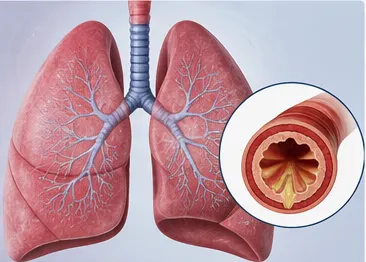
Healthy air sacs are small, springy and elastic. In COPD they lose their spring, join into large floppy spaces, and the small airways get thick and narrow — so air gets trapped and it feels hard to breathe out fully.
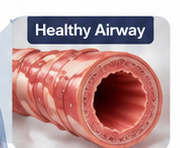
Open airways. Thousands of tiny elastic air sacs empty easily with each breath out.
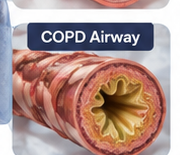
Narrowed, mucus-filled airways and stretched, broken air sacs. Air stays trapped, so the next breath in has less room.
Symptoms we look out for
COPD creeps in slowly. Many people put these down to age or "smoker's cough" for years before they come in.
Long-standing, most days, worst on waking.
You slow down, or stop to catch your breath while walking briskly.
Repeated courses of antibiotics every cold season.
Exercise tolerance falling over months to years.
A whistling sound, often with a heavy, full-chest feeling.
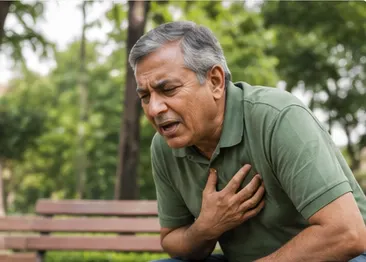
- Your breathlessness worsens over a few days
- Phlegm turns yellow, green or increases
- You need your reliever inhaler far more than usual
- You have fever, ankle swelling or confusion
These are signs of a flare-up (exacerbation). Treated early, most flare-ups settle at home.
Tests we use to confirm it
COPD cannot be diagnosed on symptoms or an X-ray alone. We measure your breathing — it is painless and takes a few minutes.

Pulmonary Function Test
You take a deep breath in and blow out hard and long into a tube. This confirms airflow obstruction, grades severity (GOLD 1–4) and shows how much improves with a puff of medicine.
Needs your full effort — we coach you through every blow.

Forced Oscillation Technique
You simply breathe normally while gentle sound waves measure resistance in your airways. No hard blowing — ideal if you are very breathless, elderly, or can't perform a full PFT.
Especially good at picking up small-airway disease early.
To look for emphysema, old TB scarring, bronchiectasis or other causes.
Tells us whether you need home oxygen.
Measures real-world stamina and oxygen drop on walking.
Helps decide whether a steroid inhaler will help you.

Special situations we see often
Not all COPD looks the same — and in India a large share of it has nothing to do with cigarettes.
Post-tuberculosis COPD
Your TB was cured — but the healing left scars that pull and narrow the airways. Years later this behaves like COPD, sometimes with pockets of widened airways (bronchiectasis) that collect phlegm.
Why it matters: it needs a different mix — airway clearance and physiotherapy alongside inhalers, careful watch for recurrent infection, and re-testing to be sure the TB has not returned. Never assume ongoing breathlessness after TB is "just weakness".
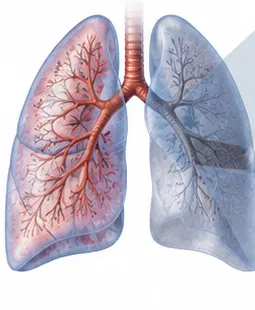
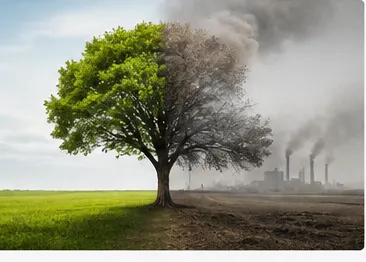
Years of wood- or dung-fire cooking smoke, traffic fumes or dusty work. Seen in women who never smoked; better ventilation, LPG and a mask matter as much as inhalers.
Childhood asthma plus later smoking. These patients usually do need a steroid-containing inhaler, so the label changes treatment.

Heart disease, sleep apnoea, acidity, anxiety and weight loss all worsen breathlessness. We check for them rather than blaming the lungs alone.
Treatment: how we help you breathe easier
Inhalers are the backbone. What matters more than the brand is that the medicine actually reaches your lungs — so we check your technique at every visit.
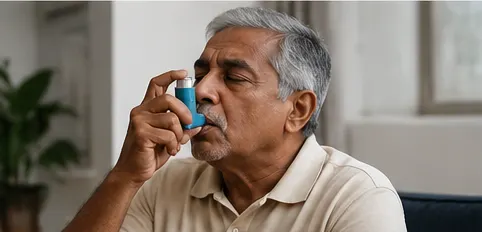
Fast-acting rescue puff for sudden breathlessness. Keep it with you always.
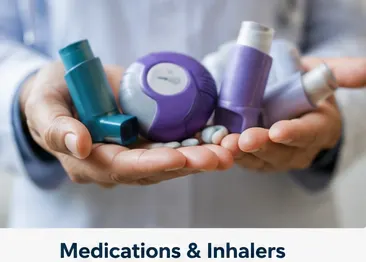
Two long-acting medicines that keep airways open all day. Taken even on good days.
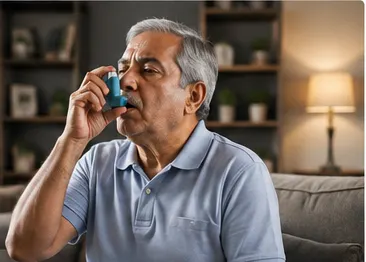
Added when you keep having flare-ups or have high eosinophils — not for everyone.
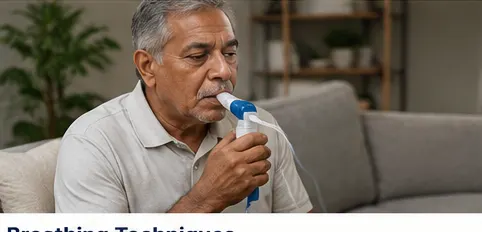
A spacer gets far more medicine into the lungs. Nebulisers are mainly for flare-ups.
- Shake and remove the cap
- Breathe out fully, away from the device
- Seal your lips and press as you start breathing in
- Breathe in slow and deep (fast and hard for powder devices)
- Hold 10 seconds, then rinse your mouth

Bronchoscopic and interventional procedures
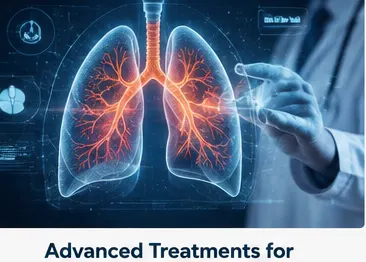
For a small group with severe, very over-inflated lungs, a thin flexible camera passed through the mouth can treat the lung from inside — no surgical cut. We assess suitability with a CT and breathing tests.
- Valve placement (BLVR) — tiny one-way valves collapse the worst-damaged lobe so healthier lung can expand
- Bronchoscopy for diagnosis — sampling when infection, TB or a growth is suspected
- Therapeutic clearance — removing thick mucus plugs or stopping bleeding
- Airway stenting / dilatation — for narrowed airways, often after TB
Four things that help as much as medicine
These are the parts you control — and they change how the next ten years feel.
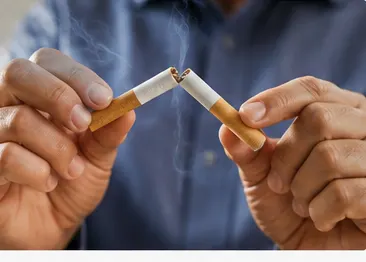
The single most powerful thing you can do, at any stage. Willpower alone works for few — we combine a quit date, counselling, nicotine replacement (patch, gum, lozenge) and medicines where suitable, with follow-up calls through the hard first weeks.
Also applies to beedi, cigar, hookah and chewing tobacco.
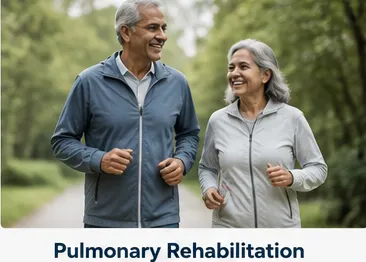
A structured programme of walking, strength work, breathing techniques (pursed-lip breathing) and airway clearance. It won't change your PFT numbers — but it reliably improves breathlessness, stamina and confidence.
We teach a home routine you can keep up.
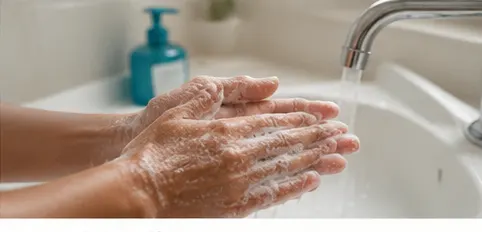
Most COPD flare-ups start with an infection. Influenza vaccine every year, pneumococcal vaccine as advised (about every 5 years) and COVID-19 boosters — plus simple hand hygiene and avoiding crowds when flu is around.
Fewer infections means fewer hospital admissions.

Long-term home oxygen when blood tests show you need it, protein-rich meals to protect muscle, and reducing smoke and dust at home.
Oxygen is a prescribed treatment, not a comfort device.
Common questions
Will quitting smoking now still help if I already have COPD?+
Yes — at every stage. Quitting slows the rate of lung function decline back toward the normal age-related rate within 12 months, regardless of how long you have smoked.
Is pulmonary rehabilitation worth the time?+
It is the highest-impact non-drug intervention in COPD — improving breathlessness, exercise capacity and quality of life, with effect sizes larger than most inhalers.
Can COPD be cured?+
The damage already done cannot be reversed, but COPD is very treatable. The right inhalers, vaccination, rehabilitation and stopping smoking slow the decline and cut flare-ups sharply — most people stay active for many years.
Do I have to use the inhaler forever? Are steroids in it harmful?+
Daily inhalers work only while you take them, so they are usually long term. The dose that reaches your lungs is tiny compared with steroid tablets. Rinsing your mouth after use prevents the common side effects of hoarseness and oral thrush.Asthma guide →
I never smoked. How can I have COPD?+
Cooking-smoke (biomass) exposure, occupational dust, long-term air pollution, childhood lung infections and old tuberculosis can all cause the same airflow obstruction. Post-TB COPD is very common in India.
What is FOT, and why did you choose it instead of a PFT for me?+
The Forced Oscillation Technique measures your airway resistance while you breathe normally — no hard blowing needed. We use it when you are too breathless, too tired or otherwise unable to give the full effort a PFT demands, and to detect small-airway disease early.Lung function test →
Is a nebuliser better than an inhaler?+
No. Used correctly — ideally with a spacer — an inhaler delivers the medicine just as well and is far more portable. Nebulisers are mainly for severe flare-ups.Asthma guide →
How often should I come for review?+
Usually every 3 to 6 months when stable, so we can check your technique, adherence, oxygen level and vaccination status — and sooner any time you have a flare-up.
Can COPD be diagnosed without spirometry?+
Symptoms and examination can raise suspicion of COPD, but spirometry is important for confirming persistent airflow obstruction and distinguishing COPD from other causes of respiratory symptoms.
Why am I breathless even though I stopped smoking years ago?+
Previous smoking can cause lasting changes in the lungs, and some people continue to experience symptoms after quitting. Other conditions such as asthma, bronchiectasis, interstitial lung disease or cardiac disease can also cause persistent breathlessness and should be considered.
Common myths — and what is actually true
These come up in almost every COPD consultation. Clearing them up usually changes how well someone does over the next year.
“COPD only happens to smokers.”
Smoking is the commonest cause, but in India biomass and firewood smoke, occupational dust, air pollution, childhood chest infections and lung damage after tuberculosis all cause COPD. Many of our patients have never smoked.
“The damage is done, so treatment will not help.”
The airflow loss is not reversible, but breathlessness and flare-ups are treatable. Inhalers, pulmonary rehabilitation, vaccination and stopping smoking all reduce symptoms and hospital visits.
“Inhalers are a last resort, and they are habit-forming.”
Inhalers are first-line treatment, not a last step. They deliver a small dose directly to the airway rather than the whole body, and they are not addictive.
“A chest X-ray can tell me whether I have COPD.”
It cannot. COPD is diagnosed on spirometry, which measures persistent airflow obstruction. An X-ray or CT is used to look for other problems, not to make the diagnosis.
“Home oxygen means the end stage.”
Oxygen is prescribed on measured blood-oxygen levels, not on how ill someone looks, and in patients who qualify it is used long-term alongside normal daily life.
“Exercise is dangerous when you are breathless.”
Supervised, graded exercise is one of the most effective treatments in COPD. Pulmonary rehabilitation improves walking distance and breathlessness in most people who complete it.
When to seek medical attention urgently
- Breathlessness that is worse than your usual, or present at rest
- Sputum that turns yellow, green or larger in amount, with or without fever
- New ankle swelling, or you cannot lie flat
- Your reliever inhaler or nebuliser is no longer helping
- New confusion, drowsiness or a severe morning headache
Go to hospital immediately if you cannot complete a sentence, your lips or fingertips look blue, or you feel drowsy — these suggest a severe exacerbation with low oxygen or carbon-dioxide retention.
When should you see a pulmonologist for COPD?
- You are over 40 with a long-standing cough, sputum or breathlessness and have never had spirometry.
- You have been treated for “asthma” for years without a confirmed diagnosis.
- You have had two or more flare-ups, or any hospital admission, in the past year.
- You are still breathless despite regular inhalers, or you are unsure how to use them.
- You had tuberculosis in the past and your breathing has never returned to normal.
How Lung Care can help
- Spirometry to confirm airflow obstruction and grade it, with lung volumes and DLCO when needed.
- A treatment plan matched to your symptoms and flare-up history rather than a fixed prescription.
- Vaccination advice, smoking-cessation support and a home exercise and breathing programme.
- Assessment for bronchoscopic and interventional options where they apply, and for oxygen when levels are measured low.
- Long-term follow-up in the asthma, COPD and ILD clinic, with a plan for what to do during a flare-up.
Tests and services this involves
Spirometry with bronchodilator reversibility, lung volumes and diffusion capacity (DLCO) on calibrated equipment.
Effort-independent airway testing for children, older patients and anyone who cannot perform full spirometry.
Bronchoscopy, EBUS, cryobiopsy and medical thoracoscopy — tissue and lymph-node sampling under one roof.
Structured long-term review — control assessment, inhaler technique, step-up and step-down decisions.
Why flare-ups follow infections, and which vaccines reduce them.
MBBS, DNB (Pulmonary Medicine), MNAMS, IDCCM, EDARM — consultant interventional pulmonologist and sleep physician, RS Puram, Coimbatore.
Get a clear plan for your COPD
Breathing tests, an inhaler that suits you, and a follow-up plan — with Dr. Arun Gangadhar at our RS Puram clinic.
18, Cowley Brown Road, R.S. Puram, Coimbatore — 641002

This page is for general patient education and does not replace a consultation. Inhalers, oxygen and procedures must be prescribed for you individually.
About the doctor who will review your COPD
Dr. Arun's professional website carries his qualifications and interventional bronchoscopy work.
Written and medically reviewed by Dr. Arun Gangadhar
MBBS, DNB (Pulmonary Medicine), MNAMS, IDCCM, EDARM — Consultant Interventional Pulmonologist & Sleep Physician, Lung Care, RS Puram, Coimbatore.
Published: June 2026 · Last reviewed: August 2026
References & guidelines
This page is general information, not a substitute for a consultation. For advice specific to you, book an appointment.